

When Alexander Kapp enrolled in the ![SEMO Online graduate Alex Kapp in his graduation gown. [horizontal]](../_images/screenshot-2026-02-10-at-8.58.04am.png) Bachelor of Science in Psychology program at Southeast Missouri State University, he knew what he wanted to get out of the experience: some practical skills he could use in his role as a behavioral health technician and a path toward more advanced roles in the mental health field. He got both of those things. But he got something else too.
Bachelor of Science in Psychology program at Southeast Missouri State University, he knew what he wanted to get out of the experience: some practical skills he could use in his role as a behavioral health technician and a path toward more advanced roles in the mental health field. He got both of those things. But he got something else too.
He got a mentor.
Kapp found the supportive ally he needed in 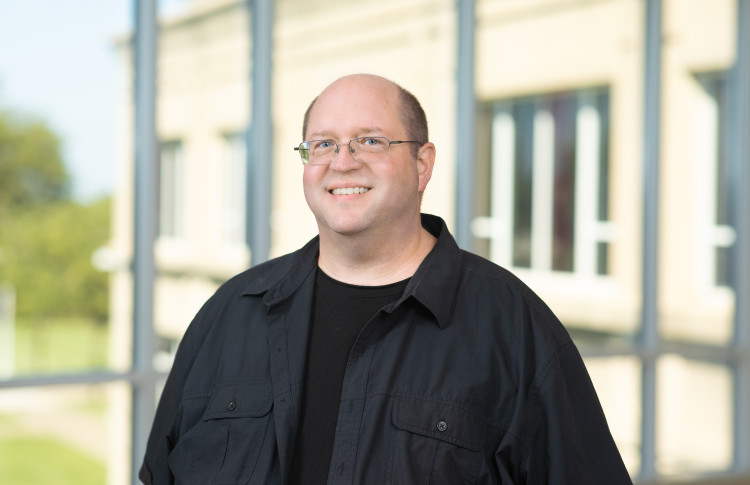 Shawn Guiling, PhD, an assistant professor of psychology at SEMO whose academic research focuses on topics such as self-esteem, belonging and engagement in education. Together, Kapp and Guiling prove that meaningful student-teacher relationships can and do bloom in both in-person and online learning environments at the university.
The Growth of a Mentorship
Kapp first met Guiling when he took his Career Development in Psychology course, where Guiling’s open and friendly approach immediately made him feel like he was part of a community.
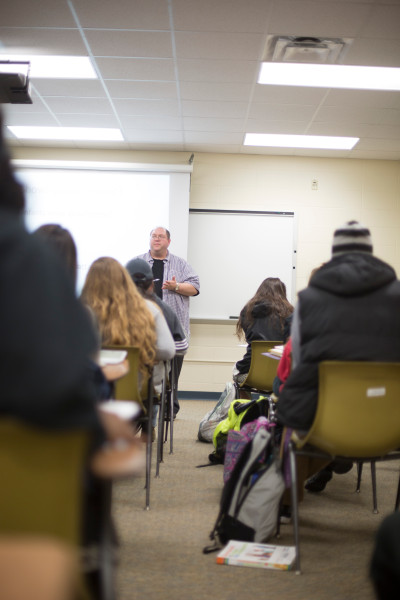 “I really connected with the way the class was set up,” Kapp says, recalling Guiling’s focus on communication and conversation. “His teaching style really just fit for me. I learned a lot, and everything that I learned I could apply right away or use in some way. He emphasized the importance of having good relations with faculty, and I felt comfortable reaching out.”
For Guiling, this wasn’t a fluke. He goes out of his way to ensure his students feel supported and heard. The main component of this strategy is his Check In, Check Up, Check Out system, which involves holding one-on-one meetings with students throughout the semester.
“Belonging-ness is kind of like my little mission,” Guiling says. “I realized that there were students who were there, but they weren’t connecting as well as they could. And so, if they were going to come to class, and I was going to run the class each day, we might as well really buy into the connection part of it.”
Guiling’s mission doesn’t end with his on-campus students. He checks in, up and out with his online students as well. Kapp saw this firsthand when he moved out of state and switched from in-person courses to online courses. Even though he made the switch partway through his studies, he continued to have a strong relationship with Guiling.
Though Guiling is certain the check-in strategy has helped his students academically, he is in the process of conducting more formal research into how. That data will help not just him and his colleagues at SEMO but also instructors at other schools who are striving to better serve their students.
A Curriculum Built on Personal and Professional Development
While Guiling’s check-in system was a major factor in Kapp’s positive online and on-campus experience at SEMO, it wasn’t the only factor. Kapp feels that Guiling’s career advice was especially helpful and motivational.
For example, even though Kapp had a job in a mental health field, he wasn’t entirely sure where he wanted to go next. This uncertainty was compounded by the fact that he and his classmates, like many psychology students, were under the assumption that they’d need at least a master’s degree to qualify for anything but the most entry-level positions.
“When I started the psychology program, I didn’t know what I wanted to do in the field. I just knew that I wanted to work with people. I wanted to help people,” Kapp says. “Dr. Guiling showed us there is plenty that you can do right now. That just made me want to actually go do it.”
Motivated by Guiling’s guidance, Kapp explored several different areas of mental health care while he pursued his degree. After graduation, he gained full-time employment as a registered behavior technician at an alternative school for children with intellectual and learning disabilities. He’s also making a plan to become a board certified behavior analyst (BCBA), which requires completing 2,000 clinical hours and earning a master’s degree.
“Once I have my BCBA certification, that will open a lot more doors, and I can look into more things that I can do with that license,” Kapp says about finding his right career fit. “Dr. Guiling instilled that in me, to do as much as you can.”
Fostering Opportunities for Impactful Interactions
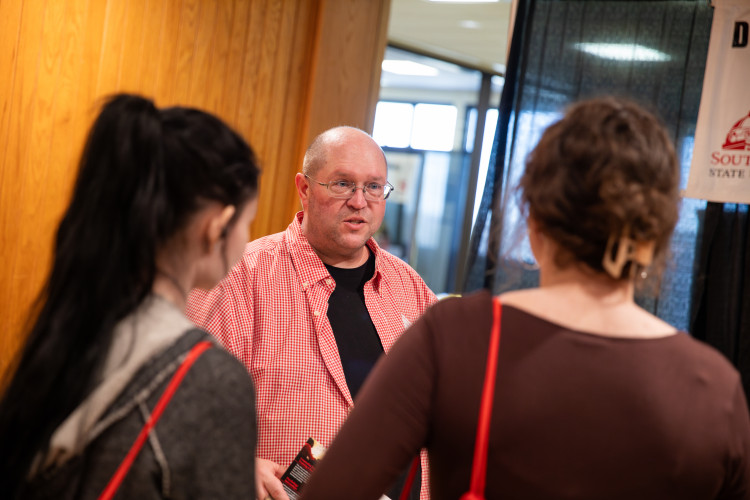 While Guiling provides all of his students with guidance through check-ins and his intentionally designed curriculum, he and his colleagues also give them the opportunity to work as teaching assistants (TAs).
“The way we do teaching assistantships is, if students have passed the course and they want to see what it’s like to be a teacher, they can just informally approach the faculty,” Guiling says of the program.
Once Kapp passed the Career Development in Psychology course, he decided to become a TA himself. In that role, he helped Guiling grade assignments and carry out other administrative duties and served as Guiling’s first online TA. Most importantly, Kapp got the chance to empower other students the way Guiling had empowered him.
“I recorded a video talking about my experience working in the mental health field and how there are jobs everywhere if you look for them,” he says. “There are jobs in your field that you can find, and it is very important to do so, so you can build on that foundation for your future.”
Guiling found this to be the perfect complement to his lectures and has continued to share Kapp’s video with new students.
The Power of the Little Moments
Outside of the more formal aspects of their mentorship, Kapp and Guiling would meet on Zoom regularly to talk and check in. Kapp says those little moments continued to be vital to his personal and professional development.
![SEMO Online graduate Alex Kapp in his graduation gown. [vertical]](../_images/alex-kapp-1-1.jpg) “I was talking to Dr. Guiling about what I wanted to do after I graduated,” Kapp says. “He told me that a lot of people go into the counseling field, and while not everyone finds they are suited to it, I was definitely a person who could do it and could operate in any spot in the mental health field and do a great job. That really helped boost my confidence and give me that kind of final push like, okay, I actually can do this and I should do this.”
“I was talking to Dr. Guiling about what I wanted to do after I graduated,” Kapp says. “He told me that a lot of people go into the counseling field, and while not everyone finds they are suited to it, I was definitely a person who could do it and could operate in any spot in the mental health field and do a great job. That really helped boost my confidence and give me that kind of final push like, okay, I actually can do this and I should do this.”
Since Kapp’s graduation in spring 2025, those moments still happen from time to time — and both parties are confident they will continue.
Kapp’s advice to other students?
“A lot of people just forget that you have a direct line to your professor,” he says, referring to email and other communication methods that students have access to. “If you need anything, if you want to talk to your professor about anything, just reach out, because they want to hear from you.”
Find Your Balance of Community and Flexibility
While Alexander Kapp and Shawn Guiling’s story may be a unique one in the context of online learning, it’s not so rare in SEMO Online’s Bachelor of Science in Psychology program.
In this program, working students seeking to advance in their careers can take asynchronous and interactive classes on cognitive processes, psychological development, and a wide range of elective topics covering every corner of the field. But with access to Learning Assistance Programs, SEMO’s academic coaching program, SupportNET, and passionate faculty members like Guiling, assistance and mentorship are always at hand.
To find out more about how SEMO Online empowers students to make bold, informed decisions about their futures, request more information today.
Recommended Readings
Can I Get College Credit for My Prior Training and Experience?
Is Psychology a Social Science?
What Are the Benefits of Online Psychology Programs?