

Special education services are critical to ensuring that students with disabilities succeed in school. However, a shortage of special education teachers is making it challenging to meet their needs.
A 2024 report from the U.S. Government Accountability Office identified staff shortages as a significant obstacle in educating students who have disabilities. The congressional watchdog agency noted that those shortages increase the risk that students:
- May not receive the services they need
- Could receive inadequate services
- Could receive services that are delayed
Individuals with an interest in joining the ranks of special education teachers in Missouri or elsewhere should explore how to become a special education teacher and the requirements for entering the profession. Anyone considering earning a master’s degree in an area such as curriculum and instruction or exceptional child education can also benefit from exploring what it takes to become a teacher of special education.
What a Special Education Teacher or Autism Teacher Does
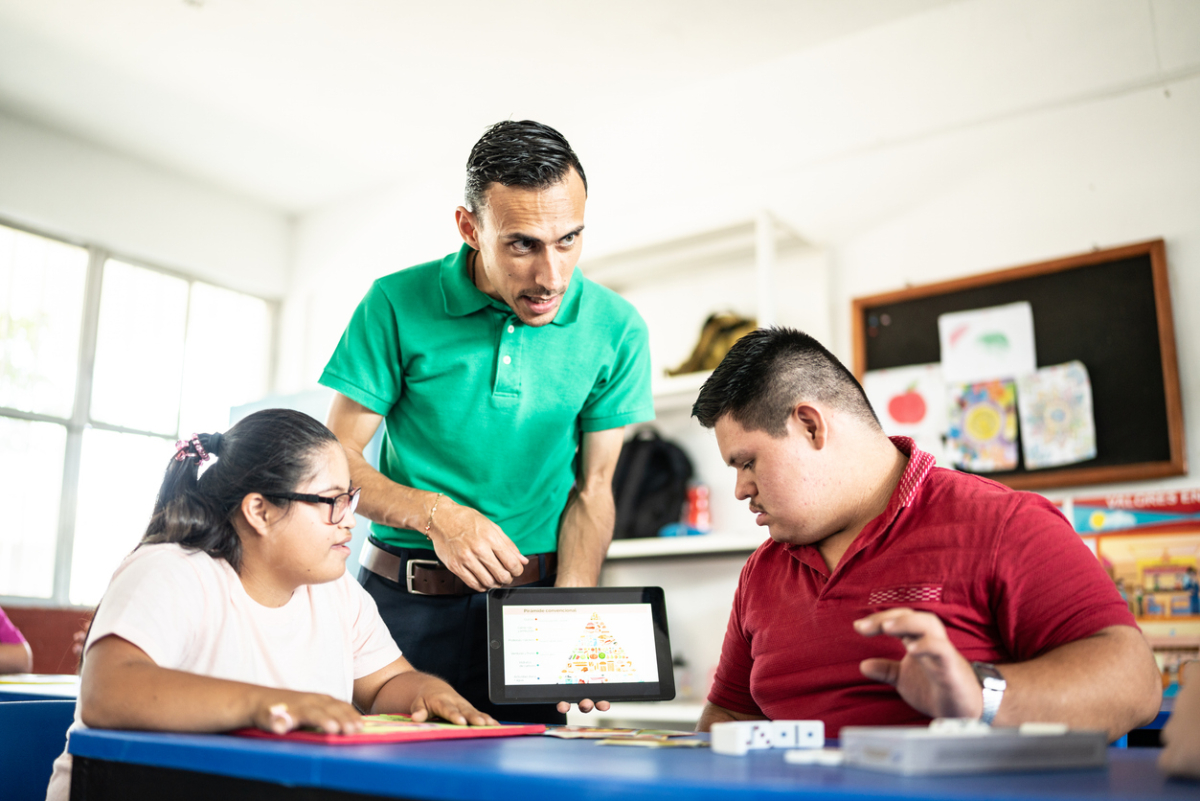
Special education teachers concentrate their efforts on educating students who have mental, emotional, physical or learning disabilities. They can teach students with a range of disabilities or specialize—for example, by becoming an autism teacher or focusing exclusively on students who have learning disabilities.
By creating instructional strategies that are customized to students’ needs, special education teachers help ensure that their students can get the most out of their educational experience. Special education teachers are also instrumental in developing inclusive learning environments, and they play a vital role in their students’ development, both academically and personally.
Individuals who become special education teachers carry out responsibilities such as:
- Evaluating students’ skills and identifying their educational needs
- Creating individualized education programs for their students
- Modifying general lessons to meet students’ needs
- Developing activities that align with their students’ abilities
- Providing instruction and mentoring their students
- Monitoring and evaluating their students’ performance
- Sharing information regarding their students’ progress with their families, counselors or school administrators
- Helping their students prepare for a new grade or for life after graduation
How to Become a Special Education Teacher in Missouri and Other States
To become a special education teacher in Missouri or elsewhere, an individual needs to fulfill certain requirements.
Earn a Relevant Bachelor’s Degree
Completing a bachelor’s degree program in special education or a related field can help individuals establish a solid foundation for a career in special education. These degrees can offer key knowledge and skills for teaching students who have disabilities, as well as in areas such as educational psychology and child development.
Prospective special education teachers can also earn a bachelor’s degree in general education and then complete a special education training program later on.
Consider Earning a Graduate Degree
Earning a graduate degree can provide an aspiring special education teacher with a deeper understanding of the needs of students in special education and enhance their skills. These programs often cater to teachers who are already licensed but want to enhance their skills:
- An individual who enrolls in a Master of Arts (MA) in Secondary Education program can specialize in a specific subject area, such as working with students with autism spectrum disorder (ASD). These programs also help teachers develop advanced skills in instruction, assessment and teaching in a multicultural society.
- A teacher who enrolls in a MA in Exceptional Child Education program can also gain advanced expertise in working with students with ASD, as well as advanced skills in the foundations of special education and in transition planning for individuals with exceptional learning needs.
Completing a graduate degree program is a great way to strengthen skills in areas such as:
- Developing curriculum
- Using technology in instruction
- Assessing students’ needs
- Designing instructional programs
Obtain a State Teaching Certification or License
To begin working in their field, teachers of all kinds need to obtain a state license or certification. For example, an individual who wants to become a teacher in Missouri needs to apply to the Missouri Department of Elementary and Secondary Education for certification.
Aspiring teachers can obtain a wide variety of certifications, including several types of special education certifications. For example, Missouri offers special education certifications for teaching students who:
- Are blind or have low vision
- Are deaf or hard of hearing
- Are in early childhood special education
- Have mild-to-moderate cross-categorical disabilities
- Have severe developmental disabilities
To obtain Missouri certification to teach these types of special education, an individual must:
- Complete a bachelor’s degree program and an educator preparation program that the Missouri Department of Elementary and Secondary Education has approved
- Comply with the specific course requirements for the desired certification, as specified in the Missouri Code of State Regulations
- Have a recommendation from a designated official from the individual’s bachelor’s degree program
- Meet specific GPA requirements
- Achieve a qualifying score on the Praxis assessment test that’s related to the specific special education certification the individual wishes to obtain
- Submit a completed certification application, including transcripts and a fingerprint-based background check
Employment Prospects and Salaries for Special Education Teachers
Becoming a special education teacher can allow you to take advantage of a promising employment outlook for the field.
- Missouri is projected to have job openings for an average of 510 special education teachers each year through 2032, according to Projections Central. The forecast includes special education teachers from preschool through secondary school in Missouri.
- The U.S. is expected to have job openings for an average of 37,800 special education teachers each year through 2034, according to the U.S. Bureau of Labor Statistics (BLS).
As of May 2024, the median annual salary of special education teachers was $64,270, according to the BLS. Salaries can vary based on geographic location, employer and years of experience.
With the Proper Education, a Rewarding Career as a Special Education Teacher Can Be Within Reach
Starting a career teaching special education can be a fulfilling way to use educational expertise to improve the lives of students with disabilities. Each day, special education teachers have the opportunity to make a meaningful difference helping their students learn and grow.
Individuals interested in gaining the knowledge and skills to teach special education can explore SEMO Online’s educational programs to learn how these programs can help them reach their career goals. For example, SEMO Online offers:
- An online Master of Arts in Curriculum and Instruction degree program with educational studies options in specialty areas such as autism, educational studies, English or science
- An online Master of Arts in Exceptional Child Education degree program with an add-on Missouri teaching certificate in early childhood special education
Each of these programs offers advanced expertise to place individuals on the path to great careers in education. Start achieving your career ambitions in special education today.
Recommended Readings
7 Essential Teacher SkillsBenefits of Trauma-Informed Teaching
Types of Education Master’s Degrees
Sources:
Missouri Code of State Regulations, Rules of Department of Elementary and Secondary Education
Missouri Department of Elementary and Secondary Education, Routes to Certification
Praxis, Tests Required by Missouri
Projections Central, Long-Term Occupational Projections (2022-2032)
Southeast Missouri State University, Exceptional Child Education
Southeast Missouri State University, Secondary Education
Teal, Education Requirements for Special Education Teachers
Teal, How to Become a Special Education Teacher
U.S. Bureau of Labor Statistics, Special Education Teachers
U.S. Government Accountability Office, Education Needs School- and District-Level Data to Fully Assess Resources Available to Students with Disabilities