Wildlife and Conservation Biology Degree

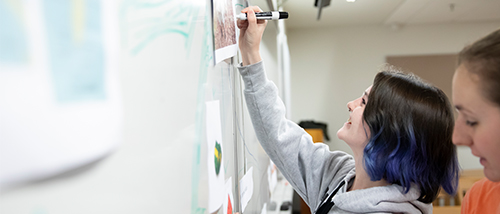
a wildlife conversation degree student smiles as she writes on a whiteboard next to pictures during a class activity
BS On-Campus Main Campus
DEGREE TYPE

Bachelor's Degree

PROGRAM TYPE

Undergraduate

APPLY NOW

Preserve species. Benefit society. Find your fearless.

A wildlife conservation biology degree option is for the student who is preparing to do graduate or seeking a career in national and state conservation and resource management.

Make Your Mark in wildlife conservation

The wildlife conservation degree curriculum includes rigorous coursework in ecology, plant biology, and animal biology. It prepares you to work one-on-one with nature in some beautiful environments.

  • Complete coursework on management of wildlife populations and wildlife habitat, conservation biology, wildlife toxicology, and wetlands ecology and management.
  • Gain hands-on experience at the Miller Reserve Wetlands Restoration Project, the Kelso Wildlife Sanctuary, the Reis Biological Research Station, and the Diversity and Research Greenhouses.
  • Engage with faculty advisors who are both active in research programs and readily involve students in their research programs.

What Can You Do with a Wildlife Biology Degree?

In the wildlife biology degree program, you’ll become prepared for careers in conservation, research, and natural resource management. As a college proud to produce wildlife biologists, SEMO is sure to equip you with hands on experience and real world skills that set you apart in today’s job market.

Graduates of wildlife conservation degrees pursue roles such as wildlife biologist, conservation officer, environmental consultant, and park or field technician. Along the way, you’ll gain valuable connections and career support through SEMO’s Career Services, helping you turn your education into a meaningful, impactful career.

Graduate School Opportunities of Recent Wildlife conservation degree Graduates

  • Southeast Missouri State University
  • University of Missouri-Columbia
  • Southern Illinois University-Edwardsville

Employment Opportunities of Recent wildlife conservation degree Graduates

  • Greenhouse Technician at Monsanto
  • Missouri Department of Conservation
  • Open Rivers & Wetland Field Station
  • Trail of Tears State Park
  • National Park Service
  • Army Corps of Engineers
  • Florida Fish and Wildlife Service

Request Info

We'd love to help you learn more about SEMO! Tell us how we can get in touch.

Loading...

Wildlife and Conservation Biology (BS) Degree Map

Explore the courses you'll need to complete your degree.

Wildlife Conservation Degree Outcomes & Careers

Your Path. Your Impact.

The wildlife and conservation biology curriculum includes coursework to prepare you to continue your education in graduate school or to start your career. You’ll complete a minimum of 120 credit hours to complete this degree, including the general education requirements and at least 39 senior division hours.

Required Courses:

  • BY163 Evolution and Ecology (4)
  • BY173 Cell and Organismal Biology (4)
  • BY283 Genetics (4)
  • BY389 Career Development in Biology (2)
  • CH184 General Chemistry I Lab (1)
  • CH185 General Chemistry I (3)
  • MI101 Introduction to Microcomputer Applications (3)
Choose one math course:
  • MA116 Precalculus A (3)
  • MA137 Precalculus (5)
  • MA139 Applied Calculus (3)
  • MA140 Analytical Geometry and Calculus I (5)
Experiential Learning Requirement: 2 hours
  • BY551-553 Biology Field Studies (2)
  • BY563-565 Experience in Museum Curation (1-3)
  • BY570 Development of Instructional Materials (1)
  • BY582 Internship in Biology (1-3)
  • BY589-591 Biological Research (1-3)
Wildlife and Conservation Option Required Courses:
  • BY332 General Ecology (3)
  • BO310 Plant Biology (4)
  • ZO310 Zoology (4)
Choose 6 Hours From:
  • BY420 Management of Wildlife Populations (3)
  • BY430 Management of Wildlife Habitat (3)
  • BY435 Conservation Biology (3)
  • BY440 Wetland Ecology and Management (3)
  • BY469 Wildlife Disease (3)
Biology Electives: choose at least 6 Hours not selected above
  • Any BY, BO, ZO, BT courses, 300 level and above (6)
Non-Biology Requirements: 3 Hours
  • GO110 Physical Geology (3)
  • GT101 Introduction to GIS 1 (3)
  • MA223 Elementary Probability & Statistics (3)

Some requirements may be fulfilled by coursework in major program.
  • Social and Behavioral Sciences – 6 hours
  • Constitution Requirement – 3 hours
  • Written Communication – 6 hours
  • Oral Communication – 3 hours
  • Natural Sciences – 7 hours (from two disciplines, one to include a lab)
  • Mathematics – 3 hours
  • Humanities & Fine Arts – 9 hours (from at least two disciplines)
  • Additional requirements – 5 hours (to include UI100 for native students)
  • Civics examination

First Year    

Fall Semester (15-17 Hours)     
  • UI100 (1) 
  • BY163 (4) 
  • CH184/185 (4) 
  • MA116/137/139/140 (3-5) 
  • MI101 (3) 
Spring Semester (16 Hours)     
  • BY173 (4)
  • EN100 (3) 
  • MA223 (3)
  • General Education (3) 
  • General Education (3) 

Milestone: achieve a target cumulative GPA of 3.0

Second Year    

Fall Semester (14 Hours)  
  • BY283 (4) 
  • BY332 (3) 
  • GT101 (3)
  • General Education (3) 
Spring Semester (14 Hours)    
  • BY389 (2) 
  • GO110/010 (3) 
  • BY Wildlife Elective (3)
  • General Education (3) 
  • General Education (3) 

Milestone: achieve a target cumulative GPA of 3.0

Third Year    

Fall Semester (15 Hours)    
  • ZO310/010 (4) 
  • Bi Wildlife elective (3)
  • Experiential Learning Crs (2) 
  • General Education (3)
  • General Education (3)
Spring Semester (15 Hours)     
  • BO310 (4) 
  • BY Wildlife Elective(3)
  • Biology elective (3) 
  • General Education (3)
  • Elective (3)

Milestone: achieve a target cumulative GPA of 3.0

Fourth Year    

Fall Semester (15 Hours)     
  • Biology Elective (3)
  • Elective (3)
  • Elective (3)
  • Elective (3)
  • Elective (3)
Spring Semester (15 Hours)  
  • Elective (3)
  • Elective (3)
  • Elective (3)
  • Elective (3)
  • Elective (3)

Milestone: achieve a target cumulative GPA of 3.0

A “Milestone” signifies a significant stage for a student in the completion
of a degree.

Become a Redhawk.

Do more than dream about the future. Take the first steps to make it all happen.

How Do Students Gain Experience in a wildlife biology degree program?

At SEMO, a wildlife conservation degree education goes beyond the classroom. The student chapter of the Wildlife Society provides peer support, activities, and guidance for students. Our students are also gaining valuable experience to complement their classroom work with internships and field experiences at:

  • Missouri Department of Conservation
  • World Bird Sanctuary
  • Army Corps of Engineers
  • Madikwe Game Reserve in South Africa
  • Whiterock Nature Preserve
  • Black Hills, South Dakota

Hands-on Learning as a Wildlife Biologist

You’ll gain hands-on real-world experience through required 80 hours outside the classroom, gaining experience conducting, presenting, and publishing research.
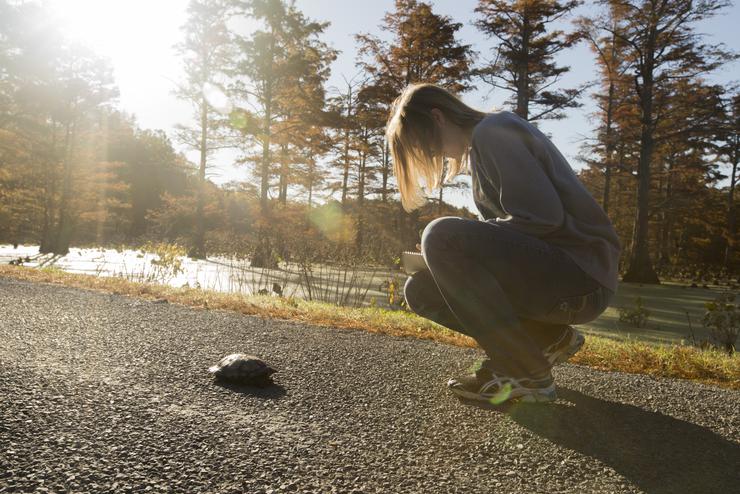
A biology student identifies and logs a turtle species during an Ecology Lab.

Location

Office

Rhodes Hall 224

Mailing Address

One University Plaza, MS 6200
Cape Girardeau, Missouri 63701