Criminal Justice Program

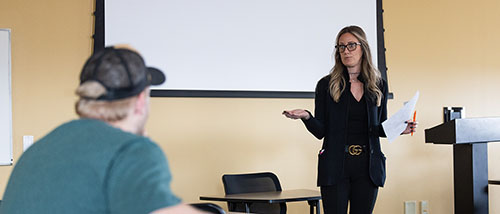
Bachelor's Degree
Undergraduate
Earn your criminal justice degree faster, smarter, and more affordably with Missouri’s first 90-hour bachelor’s degree at SEMO.
Missouri's first 90-hour Criminal Justice bachelor's degree gives you the flexibility to move toward your goals faster without sacrificing depth or quality. You'll work alongside faculty who have experience in policing, law, and corrections while building practical skills to navigate today's justice system. With hands-on training, fewer credit hours, and options like our Law Enforcement Academy certificate, this program helps you graduate sooner, save money, and step confidently into the field.
What You'll Do
-
Complete your Criminal Justice bachelor's degree in just 90 credit-hours at SEMO.
-
Study criminal law, policing, corrections, and justice administration with expert faculty.
-
Gain real-world experience through internships and community partnerships.
-
Train with professionals at the SEMO Law Enforcement Academy.
-
Build communication, problem-solving, and leadership skills employers look for.
-
Stack credentials and earn the SEMO Law Enforcement Academy certificate alongside your 90-hour degree.
What can you do with a 90-hour bachelor's Degree in criminal justice?
With your 90-hour degree, you’ll be ready to step confidently into a wide range of careers in law enforcement, corrections, and public safety. Graduates go on to work as police officers, state troopers, probation and parole officers, correctional specialists, crime analysts, and investigators. Graduates also move into federal agencies, emergency management, and security operations. And if you’re ready to take your education even further, SEMO’s nationally ranked online master’s program in Criminal Justice can help you advance into leadership positions or specialized investigative fields.
Internship, Employment, and Graduate School Opportunities
- US Marshals Service
- Federal Bureau of Investigation (FBI)
- US Secret Service
- Drug Enforcement Administration (DEA)
- Bureau of Alcohol, Tobacco, Firearms and Explosives (ATF)
- Graduate schools at prestigious universities
- Law School at Southern Illinois University
- Graduate schools at local universities
- State Trooper/Missouri Highway Patrol
- State & Federal Probation and Parole
- Sheriff Deputy
- Cape Girardeau Police Department Police Officer
- Detective
- Criminal Investigator
- Correction Officer
- Fraud Investigator
- Wildlife Officer
- Community Corrections Agencies
- Victim Assistance Projects
- Substance Abuse Counseling
- Private Security Firms
Request Info

We'd love to help you learn more about SEMO! Tell us how we can get in touch.

Criminal Justice Program Careers & Outcomes
-
$79k
Police and Detective
According to the Bureau of Labor Statistics, the median annual salary for police and detectives is $79,320.
-
$71k
Probation Officer
According to the Bureau of Labor Statistics, the median annual salary for probation officers and correctional treatment specialists is $71,530.
-
$86k
Court Reporter
According to the Bureau of Labor Statistics, the median annual salary for a court reporter is $86,220.
Criminal Justice Program Curriculum
With the 90-hour criminal justice degree, you'll get your diploma in less time. A minimum of 90 hours, completion of the General Education program, and completion of 39 senior division hours (300-599) is required for this degree.
48 Hour Major
Required Courses:
- CJ100 Introduction to Criminal Justice (3)
- CJ240 Principles of Law Enforcement (3)
- CJ250 Corrections (3)
- CJ321 Criminal Law (3)
- CJ370 Juvenile Justice (3)
- CJ425 Planning and Research in Criminal Justice (3)
- CJ499 Senior Seminar (3)
- SO305 Convergences of Crime (3)
- SO360 Criminology (3)
Electives (Select 21 hours from the following):
- CJ303 Correctional Institutions (3)
- CJ330 Criminal Investigations (3)
- CJ350 Criminalistics (3)
- CJ365 Community-Based Corrections (3)
- CJ375 Victimology (3)
- CJ400 Crisis Management (3)
- CJ410 Police Administration (3)
- CJ422 Criminal Procedures (3)
- CJ435 Special Topics (3)
- CJ440 Offender Rehabilitation (3)
- CJ471 Directed Research (3)*
- CJ480 Travel Study (1-6)
- CJ491 Internship in Criminal Justice (3)*
- CJ495 Law Enforcement Professional Practice (18)**
- CJ505 Social Inequalities (3)
- CJ510 Comparative Criminal Justice Systems (3)
- CJ519 Restorative Justice (3)
- CJ520 Law and Social Control (3)
- CJ522 Critical Analysis of Gangs in America (3)
- CJ525 Crime & Criminal Justice Policy (3)
- CJ540 Professional Standards (3)
- CJ541 The Death Penalty in America (3)
- CJ550 Social Analytics (3)
- UI300 Drugs & Behavior (3)
Experiential Learning (A minimum of 3 hours in any of the following):
Experiential Learning hours may also satisfy elective course requirements within the major without the need for taking additional hours
- CJ471 Directed Research (3)*
- CJ480 Travel Study (1-6)
- CJ491 Internship (3)*
- CJ480 Travel Study (1-6)
- CJ495 Law Enforcement Professional Practice (18)**
- Any university course earned through PLC (Prior Learning Credit)
*No more than 3 credits of Directed Research (CJ471) and no more than 6 credits of Internship (CJ491) may be counted toward degree.
**Students who demonstrate successful completion of a state-certified law enforcement academy at a Missouri Basic Law Enforcement Training Center and pass the Missouri Peace Officer License Exam (MPOLE); an out of state, federal, or military Basic Police School and Peace Officer Standards and Training (POST) exam; or, equivalent will earn
- Social and Behavioral Sciences – 6 hours
- Constitution Requirement – 3 hours
- Written Communication – 6 hours
- Oral Communication – 3 hours
- Natural Sciences – 7 hours (from two disciplines, one to include a lab)
- Mathematics – 3 hours
- Humanities & Fine Arts – 9 hours (from at least two disciplines)
- Additional requirements – 5 hours (to include UI100 for native students)
- Civics examination
First Year
Fall Semester (15 hours)
- UI100 (1)
- EN100 (3)
- CJ100 (3)
- General Education (3)
- General Education (3)
- General Education (2)
Spring Semester (15 hours)
- CJ240 (3)
- General Education (3)
- General Education (3)
- General Education (3)
- General Education (3)
Second Year
Fall Semester (15 hours)
- CJ250 (3)
- SO360 (3)
- General Education (3)
- General Education (3)
- General Education (3)
Spring Semester (15 hours)
- CJ321 (3)
- SO305 (3)
- General Education (3)
- General Education (3)
- General Education (3)
Third Year
Fall Semester (15 hours)
- CJ370 (3)
- CJ425 (3)
- CJ Elective (3)
- CJ Elective (3)
- CJ Elective (3)
Spring Semester (15 hours)
- CJ499 (3)
- CJ Elective (3)
- CJ Elective (3)
- CJ Elective (3)
- CJ Elective (3)
Milestone for each year is a minimum 2.0 cumulative grade point average. A minimum 2.0 GPA in the major and overall is required to graduate with a B.S. degree.

What will it cost?
Experiential Learning
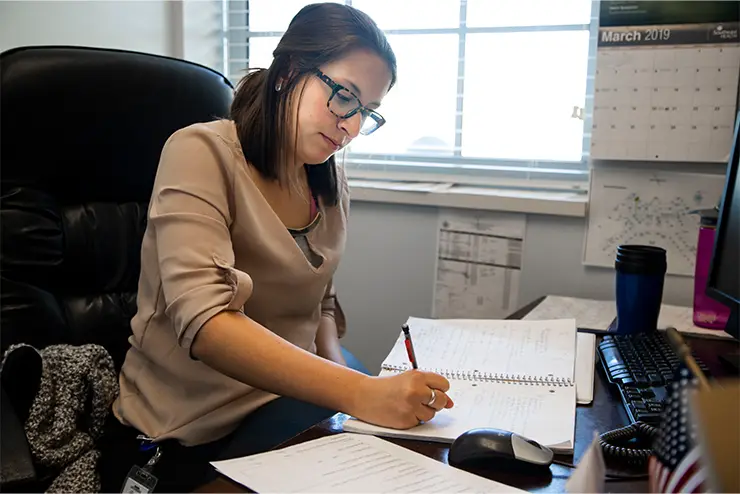
Criminal Justice Master’s Degree
Get Funding for Your Education
NFOPU Consortium
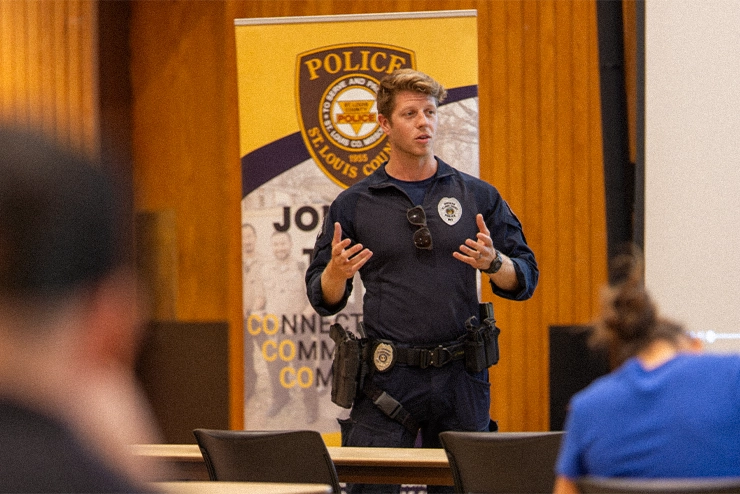
Missouri National Guard Criminal Justice
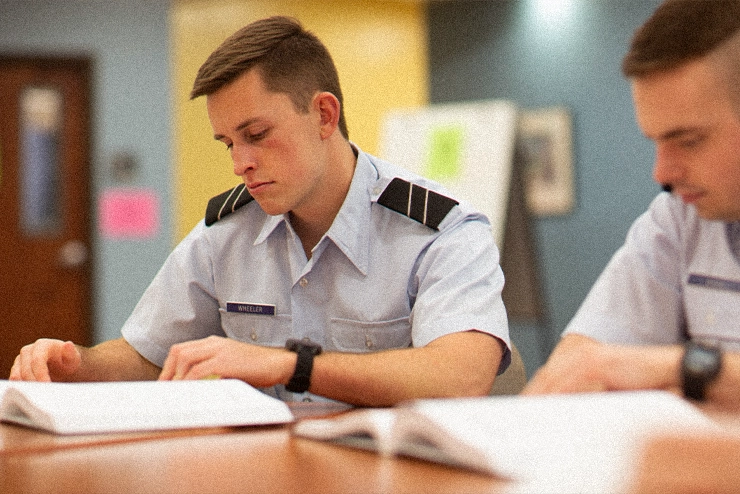
What to Know About the SEMO Law Enforcement Academy
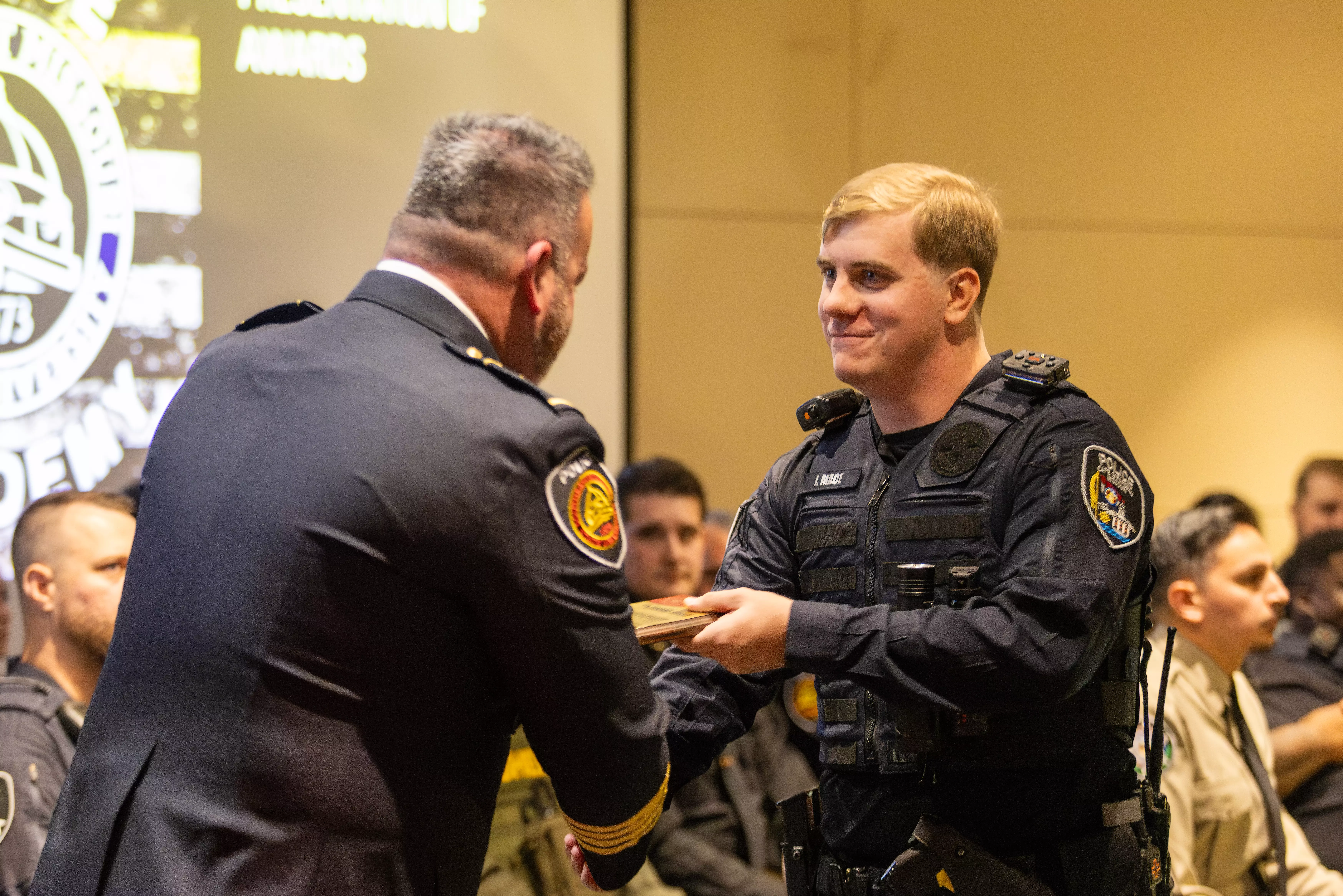
Partnerships
Become a Redhawk.
Do more than dream about the future. Take the first steps to make it all happen.
Getting the Job
Your Success, Our Priority
Frequently Asked Questions (FAQ) About a Criminal Justice Degree
Explore answers to common questions about earning a criminal justice degree, career opportunities in law enforcement, and the benefits of SEMO’s hands-on Criminal Justice program. Whether you’re interested in becoming a police officer, working in corrections, federal agencies, or public safety leadership, SEMO helps you build the experience and skills to confidently pursue a career in criminal justice.
A Criminal Justice degree can help police officers strengthen leadership skills, improve communication and critical thinking abilities, and create opportunities for career advancement. Many departments value officers with a degree because of their expanded knowledge of criminal law, ethics, investigations, and community relations.
A bachelor’s degree in Criminal Justice at SEMO takes 90 credit hours.
Criminal Justice majors can customize their degree with electives that align with their career goals and interests. Elective options may include topics such as forensic studies, criminal investigations, cybersecurity, psychology, sociology, and public administration.
A criminal justice degree can prepare you for a variety of careers in public safety and the justice system. Graduates may pursue roles such as police officer, detective, crime analyst, probation or parole officer, correctional officer, federal agent, security specialist, emergency management professional, and so much more.
Contact Us
Phone
Location
Office Location
Mailing Location
Cape Girardeau, Missouri 63701