

Music Majors at SEMO are Career Ready
Becoming job-ready starts long before graduation. At SEMO, you'll build confidence through hands-on experiences, meaningful mentorship, and opportunities to put what you're learning into practice. For Isaac, a senior in the Music Education program, those experiences mean he can confidently say, “I feel ready.”
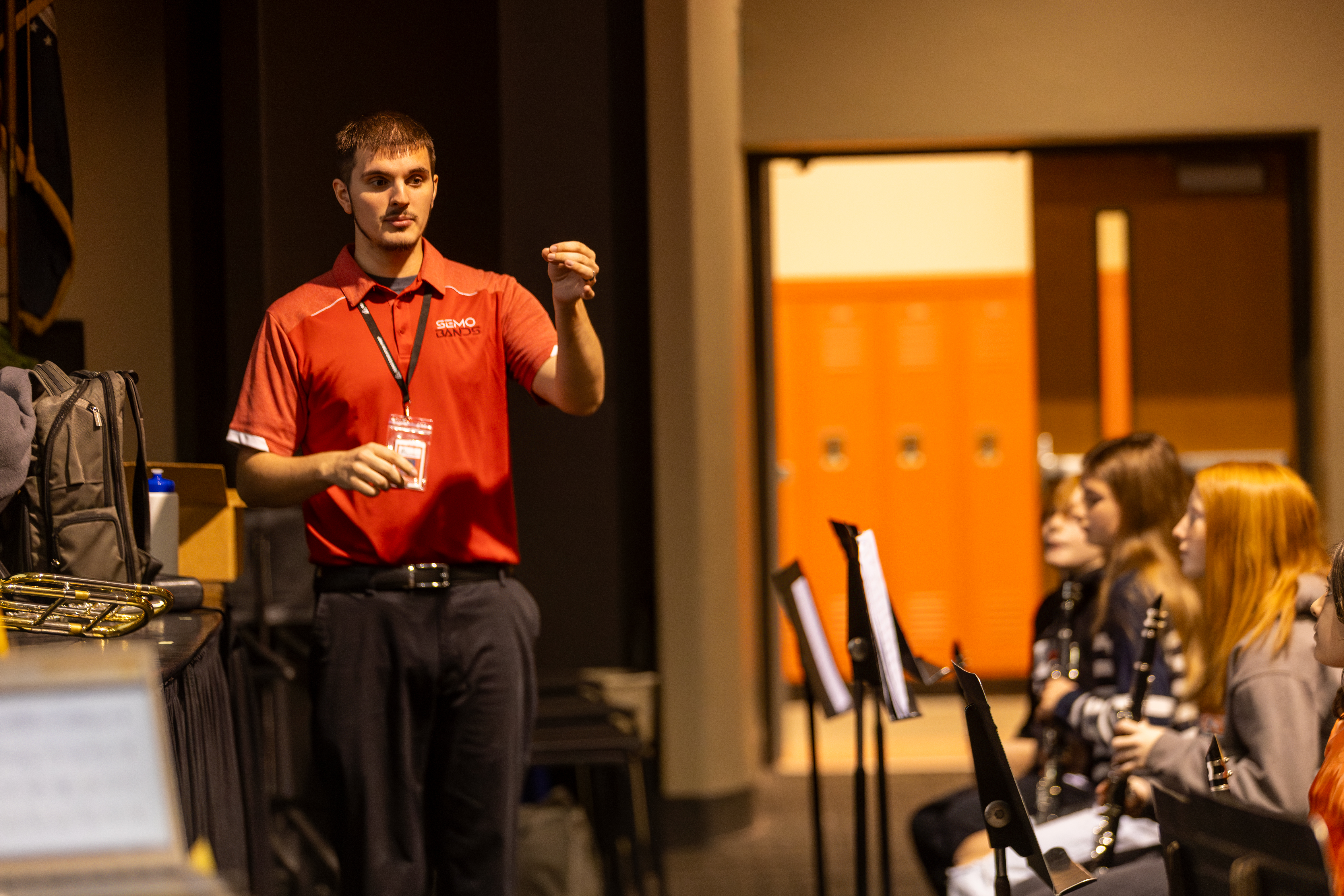
What Experiences Prepare Music Education Majors for the Job?
- Observation Hours: Students interested in music education will eventually be in their own classroom, leading the whole class. At SEMO students begin with observation hours. You won’t be teaching just yet, but you will be learning what it truly looks like to be in front of a classroom.Then, as you progress each year, our faculty will prepare you for when it is your chance to lead. As Isaac puts it, “They really prepare you and get you out there looking forward to the student teaching semester.”
- Leading Student Groups: Strong leadership skills are at the heart of being an effective music educator. For Isaac, building those skills at SEMO has taken many forms. He served as a trombone section leader, band captain, and even conducted the show band, which plays at SEMO’s home basketball games. Beyond performance leadership, Isaac has also gained experience through teaching assistant roles. These opportunities are often limited at larger universities, but at SEMO, students are trusted with real responsibility. Those experiences help music majors build communication skills and a strong resume before graduation.
- Student Teaching: “Everything has culminated into the student teaching experience. It’s exciting and a little nerve-racking, but I’m ready to go,” said Isaac. Before graduating, students complete a full semester of student teaching. By that point, coursework, observation hours, and leadership experiences have all come together. Faculty stay closely involved to make sure students feel supported and prepared as they step into the classroom full time.
- A Yamaha Institution of Excellence: SEMO is one of 10 universities nationwide recognized as a Yamaha Institution of Excellence, a distinction that reflects our commitment to exceptional music education. Students learn, rehearse, and perform using high-quality instruments, equipment, and technology while honing their craft in modern facilities designed for collaboration and creativity.
Are There Opportunities for Music Majors Outside of the Classroom?

- Ensembles: Take your pick of various ensembles to join! SEMO offers Athletic Bands, Concert Bands, Jazz Bands, Percussion Ensemble, Symphony, Guitar Ensemble, Opera Theatre, Choral Ensembles, Keyboard and Composition/Electronic.
- Special Music Days and Festivals: From Brass and String Day to our Jazz and Choral Festival, there are plenty of events to showcase your craft, learn from others, and often perform alongside musicians from the surrounding community.
When it comes to pursuing a career in music, experience matters. Employers want to know that you’ve done this before. At SEMO, we make sure you leave with a strong portfolio and a resume that reflects real world experience, so you can enter the field fearless and fully prepared. In fact, SEMO music education graduates achieve a job placement rate of higher than 95 percent, proving that our programs deliver on that promise.
Explore the Department of Music
Continue exploring the Department of Music and come for a visit to our scenic River Campus.
FAQ
Q: How do I know if music education is the right major for me?
A: If you feel energized helping someone master a rhythm, sing with confidence, or believe in themselves a little more, this path might be for you. The students who thrive here are disciplined, patient leaders who practice when they are tired and study when it would be easier not to, because they care about the impact they’ll have on future students.
Great music educators change lives every day, helping students find their voices in rehearsal rooms, on concert stages, and in the moments most people never see.
Q: What questions should I ask when visiting a college music program?
A: Here are the top 10 questions to consider:
- What does the typical first year look like for music education majors?
- How soon do students start performing?
- How soon do students start teaching in real classrooms?
- Will I work mainly with graduate assistants or directly with professors?
- What professional experience do faculty bring to the classroom?
- How accessible are professors outside of class time?
- Are there partnerships with local schools for hands-on teaching experience?
- What academic support is available for challenging courses?
- How does the program help with job placement upon graduation?
- If I want to be excellent, not just good, how will this program push me to do so?
Q: Will I have one-on-one instruction time with faculty?
A: Yes! At SEMO, music students work closely with professors through one-on-one lessons and individualized instruction. You'll receive personalized feedback from accomplished musicians and educators who are invested in your success, helping you refine your technique, build confidence, and grow as a performer.
Q: What should I look for in a strong music education program?
A: A strong music education program builds both your musicianship and your teaching skills, with real classroom experience before student teaching. Strong faculty, graduation rates, and successful job placements matter. Most of all, choose a program that challenges you, supports you, and prepares you to lead your own classroom with confidence on day one.
Q: How much real classroom experience do future music teachers get at SEMO?
A: SEMO music education students start gaining classroom experience in their very first semester on campus. They learn alongside experienced teachers, connecting theory to what actually happens in today’s classrooms. Before graduating, every student completes a full semester of in-classroom student teaching. By the time they earn their degree, they have already stepped into the role and proven to themselves they can lead with confidence.
Q: How can music education majors reduce anxiety about being “job-ready" after graduation?
A: Music education majors can reduce anxiety about career readiness by choosing a program that focuses on building real experience and skills early on. The more opportunities you have to perform, teach lessons, and take on challenges that test your abilities, the more confident you will feel when it comes time to cross the stage. At SEMO, you’ll be confident, capable, and fully prepared to step into your own classroom.