

The use of robotics has the potential to improve educational outcomes across multiple areas. A 2025 study in Scientific Reports notes that robotics in schools has emerged as an effective approach to address some of the most difficult challenges in education.
For example, robotics technology can help teachers:
- Boost student motivation
- Improve academic performance
- Implement inclusive practices for students with learning difficulties
For individuals considering further education through online undergraduate or graduate education degree programs, understanding how robotics in the classroom contributes to learning is valuable insight.
The Benefits of Robotics in Schools Are Extensive
Teachers can incorporate robotics into education in two primary ways, each offering distinct benefits for students:
- Use robotics as a learning aid across almost any subject
- Teach robotics as a standalone subject, giving students an opportunity to learn about topics such as electronics, mechanics and programming
Examining both approaches helps illustrate the full range of benefits of robotics in schools.
Robotics as a Learning Aid
Incorporating robotics into instruction can improve how teachers deliver and adapt learning experiences. For example, robotics can help teachers:
- Assess students and offer targeted instruction. Robotics tools can provide real-time assessment information that supports teachers in personalizing instruction to better meet individual students’ needs.
- Promote social and emotional learning. Robotic companions can support teachers in helping students strengthen their emotional regulation, social skills, and ability to express empathy.
- Strengthen students’ comprehension. Robot-assisted language learning can boost students’ reading and word recognition.
- Increase student engagement. Using educational robots can make subjects such as history more interactive and enjoyable, contributing to improved academic performance.
Robotics as a Subject
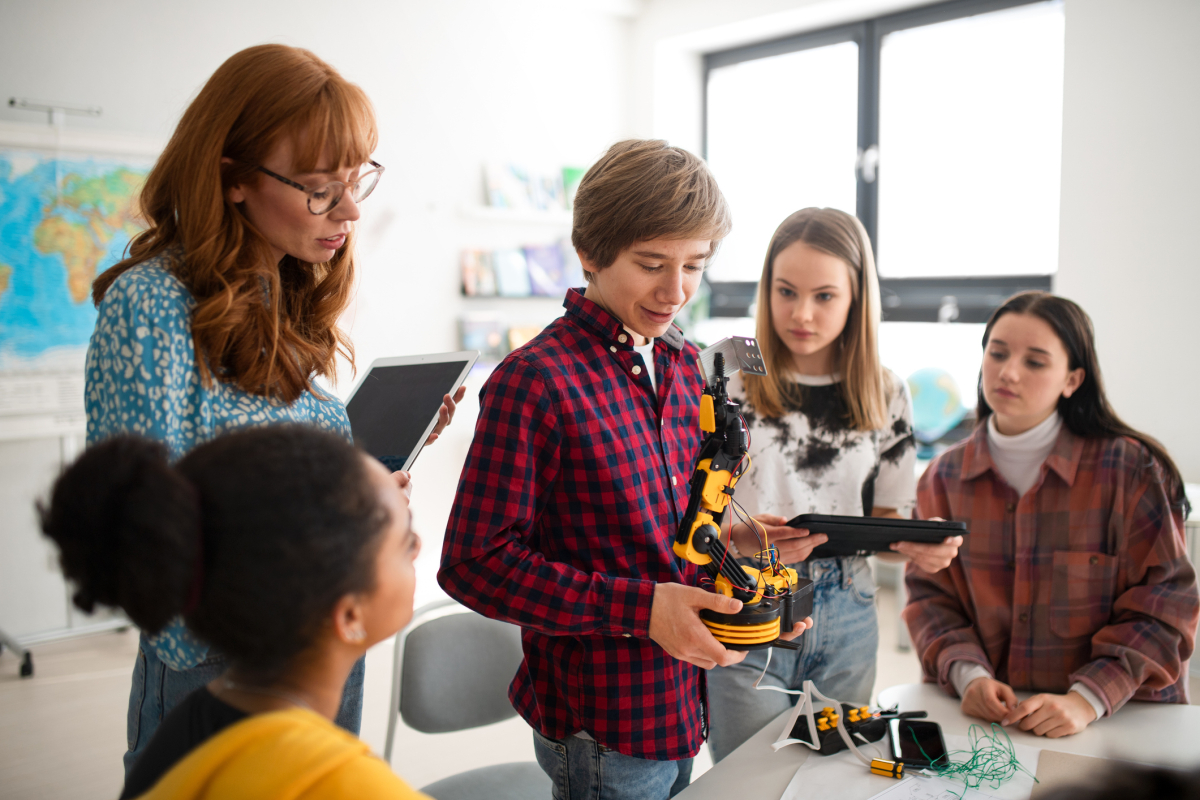
When educators teach robotics as a subject, they give students the chance to engage in hands-on, interactive work designing and programming robots. This approach offers students unique and valuable opportunities to:
- Apply scientific concepts from fields such as physics, math or computer science through practical activities
- Develop cutting-edge technical skills and expertise in areas such as coding
- Strengthen their skills in problem-solving and critical thinking
- Learn how to be persistent in finding solutions to problems
- Think creatively and discover new approaches to challenges
- Improve their teamwork and collaboration skills
- Increase their interest in science, technology, engineering and mathematics (STEM)
- Explore potential careers related to robotics and technology
How Educators Can Incorporate Robotics in the Classroom
Teachers who want to capitalize on the benefits of robotics in the classroom can take the steps outlined below.
Build Foundational Robotics Knowledge and Set Goals
When integrating technology into the classroom, teachers need to first acquire relevant expertise. Therefore, it can be helpful for them to gain a basic understanding of educational robotics and its core components.
Once familiar with the fundamentals, teachers can establish some goals for using robotics in their classrooms and what they hope to accomplish. For example, they may introduce students to basic robotics concepts or focus more on developing their coding and technical skills.
Identify and Use Available Robotics Resources
Teachers can strengthen their use of robotics in the classroom by understanding the tools and resources available to them. For example, educators can explore:
- Robotics kits designed for students to build and experiment with robots
- Programmable robots that introduce coding and logic concepts
- Robotics powered by artificial intelligence (AI) with advanced programming capabilities
Several organizations offer teachers educational robotics resources. For example:
- The U.S. National Science Foundation (NSF) offers curriculum materials and tools related to educational robotics and coding skill development.
- The TryEngineering website (sponsored by engineering and technology professional organization IEEE) offers a wide range of resources related to robotics, such as lesson plans and ideas for hands-on activities.
- The FIRST website (sponsored by a nonprofit organization dedicated to building a youth robotics and technology community) offers free educational robotics resources, such as curriculum and learning exercises.
Encourage Discussion
While incorporating robotics into instruction, it can be useful for teachers to step back and encourage classroom discussion. For example, discussing the practical applications of students’ robotics activities can help them understand what they’re doing and how it connects to the real world.
Consider Partnering with Engineering and Technology Firms
Reaching out to engineering and technology firms can be a great way for teachers to incorporate robotics into the classroom. In addition to possibly donating equipment and technology to classrooms, these firms can provide experts to speak with students, mentorship opportunities, or even student apprenticeships. Such partnerships can also support the development of more relevant, real-world-focused curricula.
Southeast Missouri State University Prepares Educators to Use Robotics in Schools
For a real-world example of how teachers can learn to incorporate robotics in schools, look no further than the EDvolution Center at Southeast Missouri State University. The center enables SEMO students to gain hands-on experience using technologies that can strengthen classroom engagement, including preparing them to incorporate robotics into the classroom.
After William Bratberg, an education professor, introduced student Tyson Roth to the center’s robotics tools, Roth developed a lesson on circumference that he used during his student teaching experience. The school district was so impressed, it later added the lesson to its curriculum.
Using Robotics in Schools Can Elevate Education
Integrating robotics into instruction allows students to strengthen their technical expertise and their soft skills in areas such as teamwork and collaboration. These experiences can help prepare students for future academic and career opportunities.
Individuals interested in expanding their expertise in education can explore SEMO Online’s undergraduate and graduate education degree programs to support their professional goals. These programs are designed to help educators build practical skills and knowledge they can apply in the classroom and throughout their careers. If you prefer in-person learning, SEMO also offers on-campus degree programs in education.
Start your journey to a meaningful career in education today.
Recommended Readings
Educational Technology Specialist Career PathHow Long Does It Take to Get a Bachelor’s Degree Online?
Types of Education Master’s Degrees
Sources:
Behavioral Health News, “The Benefits of Robotics and AI for Children and Behavioral Health”
Computers in Human Behavior: Artificial Humans, “Let Robots Tell Stories: Using Social Robots as Storytellers to Promote Language Learning Among Young Children”
EdTechReview, “The Role of Robotics in Modern Education — Benefits, Challenges, & Examples”
Engineers Outlook, “Building the Future Workforce: The Role of Robotics in K-12 Education and How Engineering Firms Can Help”
FIRST, Free Education Resources
Inflection Point Ventures, Educational Robotics: A Comprehensive Guide
KinderLab Robotics, 9 Benefits of Coding and Programming Robots for Kids from PreK-5th Grade
LocoRobo, A Beginner’s Guide to Teaching AI Through Robotics
Pedagogical Research, “Utilizing Educational Robotics in Elementary School to Foster Problem-Solving Skills and Enhance the Teaching of History”
Scientific Reports, “Educational Robotics as a Pedagogical Resource for K-12 Students with Learning Difficulties”
TryEngineering, Resources Overview
U.S. National Science Foundation, Educational Resources: Technology
Worlddidac Association, “How to Teach Robotics: A Guide for New Educators”